

Doruva Glossary
SEO, GEO, web and software glossary
Clear, example-led definitions of the concepts that come up in digital work — from search engines to AI answers, from interface design to software architecture — kept consistent with primary sources.
479 terms · 8 categories
Searches term names and alternate names; on category pages also the short definitions.
By topic
Categories
- SEO Glossary167 termsCanonical URL · Core Web Vitals · Crawling · Entity
- GEO Glossary63 termsAI Visibility · Entity · GEO · Structured Data
- AI Visibility Glossary45 termsAI Visibility · Entity · GEO · LLM
- Web Design Glossary97 termsCore Web Vitals · Responsive Design · Web Accessibility · Above the Fold
- Software Glossary138 termsAPI · LLM · API Endpoint · API Key
- Performance & Analytics Glossary71 termsCore Web Vitals · Abandoned Cart · Bounce Rate · Call to Action
- Security & Infrastructure Glossary82 termsAPI Key · Authentication · Authorization · Backup
- CMS & E-commerce Glossary27 termsAbandoned Cart · Checkout · CMS · CRM
Start here
Fundamental terms
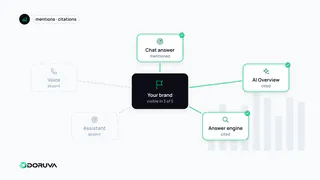 AI VisibilityAI visibility describes how often a brand is mentioned, how accurately it is described and whether it is cited as a source in answers from AI-powered systems such as ChatGPT search, Google AI Overviews and AI Mode, Perplexity or Claude. Because these answers vary from one run to the next, it is measured by repeatedly sampling a set of prompts rather than by a single ranking.Read the definition →
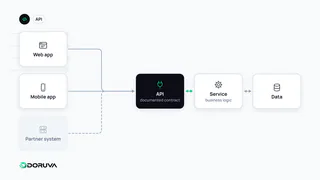 APIAn API (Application Programming Interface) is a defined set of rules that lets one piece of software use the functions or data of another. It acts as a contract: it specifies which operations can be called, what parameters they take, what responses and errors come back, and in which format. Because only the interface is shared, systems such as a web shop and a payment provider can work together without knowing each other's internals.Read the definition →
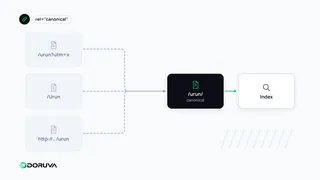 Canonical URLA canonical URL is the address a site marks as the preferred version of a page when the same or very similar content is reachable at several URLs. It is usually declared with a rel=canonical link element in the page head, an HTTP Link header, a permanent redirect or sitemap inclusion. Google treats the declaration as a strong signal, not a binding directive.Read the definition →
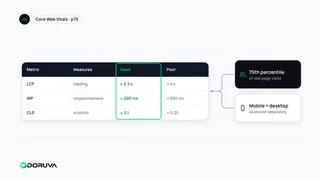 Core Web VitalsCore Web Vitals are a set of three metrics Google defines to measure real-world user experience on a web page: Largest Contentful Paint (LCP) for loading, Interaction to Next Paint (INP) for responsiveness and Cumulative Layout Shift (CLS) for visual stability. A page meets the 'good' thresholds when, at the 75th percentile of visits, LCP is 2.5 seconds or less, INP is 200 milliseconds or less and CLS is 0.1 or less.Read the definition →
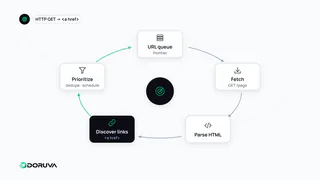 CrawlingCrawling is the process by which search engines and other automated systems use programs called crawlers (also bots or spiders) to discover web pages and download their content. Google's crawler, Googlebot, finds new URLs by following links on pages it already knows and by reading submitted sitemaps; crawled pages are then processed for possible indexing.Read the definition →
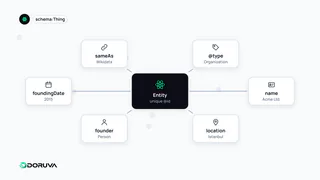 EntityAn entity is something that search engines and AI systems recognize as a single, distinguishable thing: a person, company, product, place or concept. Entities are identified by their identity and attributes rather than by the words used to name them. Consistent naming, structured data and sameAs links help systems merge different spellings into one entity and keep similarly named entities apart.Read the definition →
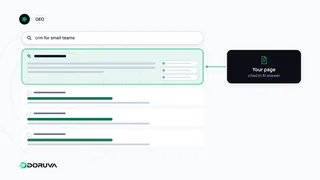 GEO (Generative Engine Optimization)Generative Engine Optimization (GEO) is the practice of helping a brand and its content be understood correctly, mentioned and cited as a source in answers produced by AI-powered search and answer systems. It builds on SEO fundamentals such as crawlability and indexing, and focuses on clarity, consistent entity information and quotable content. No technique can guarantee inclusion in AI-generated answers.Read the definition →
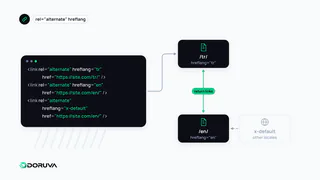 HreflangHreflang is an HTML attribute that tells search engines about the versions of a page written for other languages or regions. It is added with rel=alternate link elements, HTTP headers or an XML sitemap, and Google uses it to show each user the URL that best matches their language and location. Annotations must be reciprocal, and an x-default value can define a fallback.Read the definition →
All terms A–Z
A
- A and AAAA Records
- A/B Testing
- Abandoned Cart
- Above the Fold
- Access Token
- AEO (Answer Engine Optimization)
- AI Agent
- AI Citation
- AI Crawler
- AI Mode (Google)
- AI Overviews
- AI Search
- AI Share of Voice
- AI Visibility
- Alt Text
- Anchor Text
- Anchor Text Profile
- Answer Extractability
- API
- API Endpoint
- API Key
- Applebot-Extended
- ARIA (WAI-ARIA)
- Article Schema
- Atomic Design
- Authentication
- Authorization
- AVIF
B
C
- Cache
- Cache-Control
- Call to Action (CTA)
- Canary Deployment
- Canonical URL
- Canonicalization
- CCBot (Common Crawl)
- CDN (Content Delivery Network)
- ChatGPT-User
- Checkout
- Chunking
- CI/CD
- Citation Readiness
- Claude-SearchBot
- Claude-User
- ClaudeBot
- Click-Through Rate (CTR)
- Clickjacking
- Cloaking
- Cloudflare
- CLS (Cumulative Layout Shift)
- CMS (Content Management System)
- CNAME Record
- Code Splitting
- Color Contrast
- Connection Pool
- Consent Mode (Google)
- Container Query
- Content Decay
- Content Freshness
- Content Gap
- Content Security Policy (CSP)
- Context Engineering
- Context Window
- Conversion
- Conversion Funnel
- Conversion Rate Optimization (CRO)
- Cookie Consent
- Core Update
- Core Web Vitals
- CORS (Cross-Origin Resource Sharing)
- Crawl Budget
- Crawl Depth
- Crawlability
- Crawling
- Critical CSS
- Critical Rendering Path
- CRM (Customer Relationship Management)
- Cron Job
- CrUX (Chrome UX Report)
- CSR (Client-Side Rendering)
- CSRF (Cross-Site Request Forgery)
- CSS
- CSS Grid
- Custom Software
D
- Dark Pattern
- Database
- Database Index
- Database Migration
- Database Schema
- Database Transaction
- DDoS Attack
- DefinedTerm and DefinedTermSet
- Deindexing
- Dependency
- Deployment
- Design System
- Design Token
- Disavow
- Distributed Tracing
- DKIM (DomainKeys Identified Mail)
- DMARC
- DNS (Domain Name System)
- Docker (Containers)
- Docker Compose
- DOM (Document Object Model)
- Domain Authority
- Domain Name
- Domain Rating (DR)
- Duplicate Content
E
F
G
H
- Hallucination (AI)
- Hash Function
- Heading Structure (H1–H6)
- Headless CMS
- Headless Commerce
- Heatmap
- Helpful Content
- Hero Section
- HMAC
- Hreflang
- HSTS (HTTP Strict Transport Security)
- HTML
- HTTP Compression (Gzip, Brotli)
- HTTP Cookie
- HTTP Header
- HTTP Method (GET, POST…)
- HTTP Request and Response
- HTTP Status Code
- HTTP/2
- HTTP/3 and QUIC
- HttpOnly Cookie
- HTTPS
- Hybrid Search
- Hydration
I
J
K
L
M
- Machine Learning
- Machine-Readable Content
- Manual Action
- Marketing Attribution
- Media Query
- Message Queue
- Meta Description
- Meta Robots Tag
- Meta Title (Title Tag)
- MFA (Multi-Factor Authentication)
- Microdata
- Microservices
- Minification
- Mixed Content
- Mobile-First
- Model Context Protocol (MCP)
- Monolithic Architecture
- Multimodal Model
- MVP (Minimum Viable Product)
- MX Record
- MySQL
N
O
P
- PaaS (Platform as a Service)
- Page Builder
- Page Experience
- PageRank
- PageSpeed Insights
- Pagination
- Parametric Knowledge
- Partial Hydration
- Passage Retrieval
- Password Hashing
- Payment Gateway
- PCI DSS
- Penetration Testing
- People Also Ask
- Performance Budget
- Permalink
- Perplexity-User
- PerplexityBot
- Personal Data
- PNG
- PostgreSQL
- Preconnect
- Prefetch
- Preload
- Primary Key
- Principle of Least Privilege
- Product Feed
- Product Schema
- Product Variant
- ProfilePage Schema
- Programmatic SEO
- Progressive Enhancement
- Prompt
- Prompt Injection
- Prototype
- Pull Request
- PWA (Progressive Web App)
Q
R
- RAG (Retrieval-Augmented Generation)
- Ranking Factor
- Rate Limiting
- React
- React Server Components
- Redirect
- Redirect Chain
- Redirect Loop
- Redis
- Referring Domain
- Relational Database
- Relevance Scoring
- Render-Blocking Resources
- Rendering
- Repository
- Reranking
- Responsive Design
- Responsive Images
- REST API
- Retrieval
- Reverse Proxy
- Rich Result
- Robots.txt
- Rollback
- RUM (Real User Monitoring)
S
- SaaS (Software as a Service)
- sameAs Property
- SameSite Cookie Attribute
- Scalability
- Schema.org
- SDK (Software Development Kit)
- Search Engine
- Search Intent
- Search Query
- Search Volume
- Secrets Management
- Security Headers
- Semantic HTML
- Semantic Search
- Semantic Triple
- SEO (Search Engine Optimization)
- SEO Audit
- SERP (Search Engine Results Page)
- SERP Feature
- Server-Sent Events (SSE)
- Serverless
- Service Worker
- Session (Web)
- Shopify
- Shopping Cart
- Site Migration
- Site Navigation
- Sitelinks
- Sitemap Index
- SKU (Stock Keeping Unit)
- Soft 404
- Software Development
- Software Framework
- Source Authority
- Source Selection
- SPA (Single-Page Application)
- Speed Index
- SPF (Sender Policy Framework)
- SQL
- SQL Injection
- SSG (Static Site Generation)
- SSL/TLS Certificate
- SSR (Server-Side Rendering)
- SSRF (Server-Side Request Forgery)
- Staging Environment
- Structured Data (Schema Markup)
- Subdomain
- SVG
- Synthetic Monitoring
- System Prompt