

What is Conversion Rate Optimization (CRO)?
Definition
Conversion rate optimization (CRO) is the systematic practice of increasing the share of website visitors who complete a target action such as buying, submitting a form or signing up. Problems are identified from analytics, user research and tools like heatmaps, turned into hypotheses, and validated, ideally with A/B tests. The aim is not more traffic but more results from the traffic a site already has.
Also known as: CRO, conversion optimization, conversion optimisation
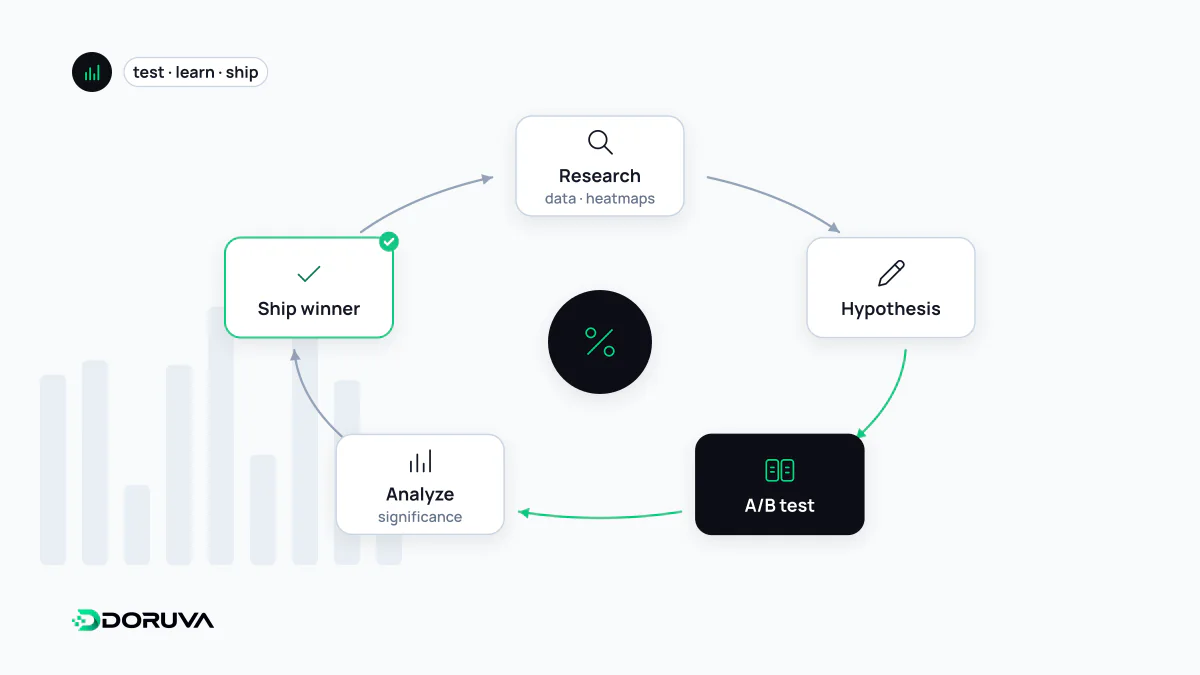
A process, not a list of tricks
CRO is often reduced to "make the button green", but it is better understood as a working loop than as a collection of tweaks:
- Find the leak. Funnel reports show where visitors drop out. Heatmaps, session recordings, form-field analytics and customer interviews suggest why.
- Write a hypothesis. "Shipping costs only appear on the final checkout step, so abandonment spikes there; showing them on the product page will reduce it." A good hypothesis rests on an observation and names both the change and the expected effect.
- Prioritise. Weigh potential impact, strength of evidence and effort together. The easiest change is rarely the most valuable.
- Validate. With enough traffic, the change runs against the current version in an A/B test.
- Record what you learned. Losing tests are logged too; a disproved assumption shapes the next hypothesis.
What actually gets optimised
Visual design is only one lever. Just as influential are how quickly the value proposition is understood, whether price and delivery terms are transparent, how many form fields there are, how error messages read, what reassurance is offered (returns policy, reviews, payment security) and the wording of the call to action. Speed belongs on the list as well: a sluggish mobile checkout undermines even the best copy.
Work usually concentrates on a landing page or the checkout flow, because that is where traffic and revenue meet.
Choosing the success metric
Each experiment needs one primary metric agreed in advance, for example "share of checkout sessions that end in a completed order". Next to it sits a guardrail metric: average order value, refund rate, or the number of leads sales actually qualifies. Cutting form fields can raise submissions while lowering lead quality, and a guardrail exposes that kind of win as a loss before it is rolled out everywhere.
CRO without much traffic
On a site with a few dozen conversions a month, a statistically sound A/B test can take months. That does not make CRO pointless; it changes the method. Moderated usability sessions with five or six people, customer interviews, the objections the sales team hears most, and fixing outright bugs (a broken form, a button hidden on mobile) come first. Impact is then tracked as a before/after comparison, with seasonality and campaign timing written down as confounders.
Where optimisation should stop
Not everything that lifts the rate this quarter is worth doing. Fake countdown timers, pre-ticked consent boxes and subscriptions that are hard to cancel are dark patterns: they can raise conversions, then return as refunds, complaints and legal exposure. Good CRO makes it easier for visitors to do what they already wanted to do.
One more misconception: conversion rate is not a direct search ranking signal. CRO and SEO overlap only in that both depend on a page genuinely meeting the searcher's need.