

What is Conversion?
Definition
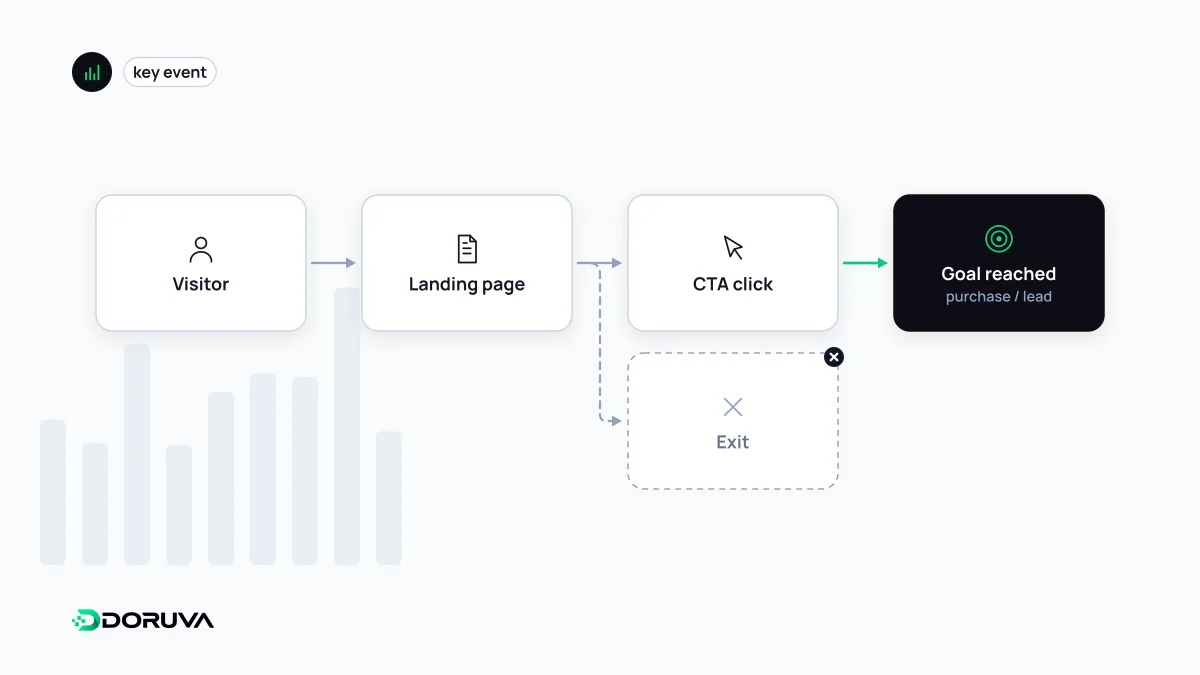
A conversion is a visitor completing an action that a business considers valuable, such as a purchase, a submitted contact form, a quote request, a phone call or a newsletter sign-up. Conversion rate is the number of sessions or users that completed the action divided by the total. Each business decides what counts as a conversion; in Google Analytics 4 these actions are marked as key events.
Also known as: conversion rate, key event, goal completion, macro conversion, micro conversion
Defining the action
There is no universal conversion. An online shop counts completed orders; a B2B consultancy counts quote requests; a SaaS product counts trial sign-ups; a local business may care most about calls and direction requests. If the definition is vague, the number is too. Viewing the contact page is not the same thing as successfully submitting the form on it.
Most teams split conversions into two tiers:
- Macro conversions create revenue or a sales opportunity directly: an order, a payment, a demo booking.
- Micro conversions are steps on the way: add to cart, a brochure download, account creation, watching a pricing video.
Micro conversions give an early signal about which pages and channels work when macro volumes are small. Reporting them with equal weight is misleading, though. A thousand PDF downloads are not worth one signed contract.
Calculating conversion rate
The formula is conversions ÷ sessions (or users) × 100. A service page with 4,000 sessions in a month and 60 successful form submissions converts at 1.5% per session. The denominator matters: if the same person visits three times before deciding, the per-user rate is higher than the per-session rate. GA4 reports both as separate metrics, so any report should state which one it uses.
A rate alone can also mislead. Broadening an ad campaign to a colder audience often lowers the rate while increasing total conversions and revenue. Track the rate next to absolute volume, cost per conversion and conversion value.
Key events in GA4, conversions in Google Ads
Google Analytics 4 now calls important analytics actions key events. The chain runs event → key event → conversion: everything is collected as an event, the ones that matter to the business are marked as key events, and those used for ad bidding become Google Ads conversions. Inside Google's products, "conversion" now refers mainly to the advertising side. How to design the underlying events is covered under event tracking.
Where the numbers go wrong
- Counting clicks instead of outcomes. A click on "Submit" does not mean the form passed validation and reached the server. Fire the conversion on the success response.
- Duplicates. Reloading a thank-you page, or returning to it with the back button, can record the same order twice. Deduplicate with a unique transaction ID.
- Spam and internal tests. Bot submissions and the team's own test orders inflate the rate.
- Consent gaps. Visitors who decline cookie consent may be invisible to your analytics tool. That is usually why analytics shows fewer leads than the CRM.
What conversion data does not tell you
Conversion rate shows whether a page persuades the people who reach it. It is not a search ranking signal, and your analytics data is not fed into Google's rankings. Systematically improving the rate is the job of conversion rate optimization; finding the step where visitors drop out is what a conversion funnel is for.