

What is Marketing Attribution?
Definition
Marketing attribution is the method of distributing the credit for a conversion, such as a purchase or a form submission, across the channels a person interacted with beforehand: ads, search, email, social media and others. The rule used is the attribution model. Last click gives all credit to the final channel, while a data-driven model estimates each touchpoint's contribution from observed paths. The model chosen changes which channels appear to work.
Also known as: attribution, attribution model, conversion attribution, data-driven attribution, multi-touch attribution
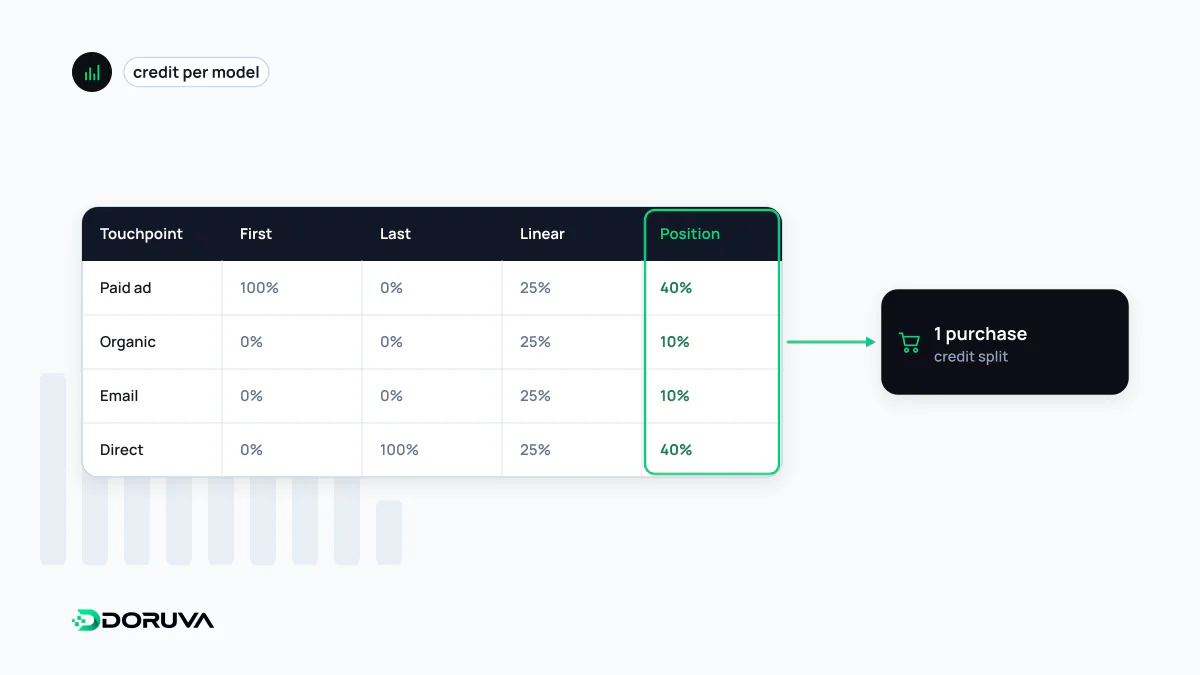
One conversion, several causes
Someone sees a social ad for a consultancy, searches the brand on Google a few days later and lands via an organic result, then clicks a link in a newsletter a week after that and submits the contact form. Which channel produced the lead? Attribution answers with a rule, and the answer drives budget decisions. A report that only looks at the final touch will consistently make awareness channels look worthless.
The common models
| Model | How credit is assigned |
|---|---|
| Last click | All credit to the final channel before the conversion. |
| First click | All credit to the channel that started the journey. |
| Linear | Equal shares for every touchpoint. |
| Time decay | More credit to touches closer to the conversion. |
| Position-based | Large shares to the first and last touch, the rest split in between. |
| Data-driven | Each touchpoint's contribution is modelled by comparing converting and non-converting paths. |
All of these remain part of marketing vocabulary, but Google Analytics 4 no longer offers most of them. Google removed first click, linear, time decay and position-based models from GA4 in November 2023. What remains for reporting is data-driven attribution, "paid and organic last click" and "Google paid channels last click". The model is chosen in the property's attribution settings.
Lookback windows
Attribution only considers touchpoints inside a time window. In GA4 the default for acquisition events such as a first visit is 30 days (7 is the alternative); for all other key events it is 90 days, with 30 and 60 available. On a B2B deal with a long sales cycle, a short window can erase the first touch entirely.
Blind spots
No model sees the whole journey. A recommendation from a colleague, a mention on a podcast, a decision made over the phone or a suggestion from an AI assistant may leave no trackable click at all. Cross-device behaviour, restrictions on third-party cookies and visitors who decline tracking fragment the data further. Mechanisms like Consent Mode fill part of the gap with modelling, but modelled data is not measured data.
Clean channel labelling is the precondition for any of this. Without consistent UTM parameters on campaign links, email traffic shows up as "direct" and no model can repair that. Treat attribution reports as an informed estimate rather than an audit, and where the stakes justify it, cross-check them with incrementality tests such as pausing a channel or running a regional holdout.