

What is On-Page SEO?
Definition
On-page SEO is the optimization of an individual web page's own content and HTML so that both people and search engines can understand what it is about and judge its relevance. It covers content quality and fit with search intent, the title tag, meta description, heading hierarchy, internal links, image alt text and structured data.
Also known as: on-site SEO, on-page optimization, onpage SEO
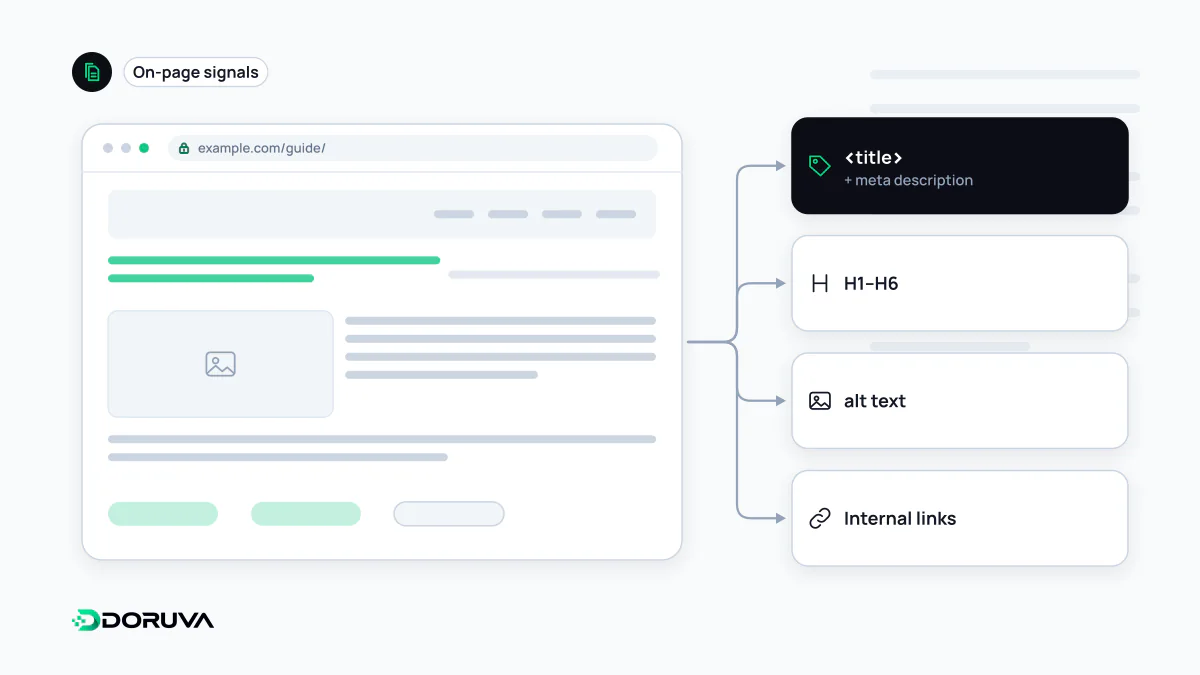
What on-page SEO covers
On-page SEO deals with everything the site owner fully controls on a page. Content sits at the centre; every other element helps that content be understood correctly and reach the right people.
- Content: an original, complete answer that matches the search intent the page targets.
- Title tag: the meta title, the main source of the clickable headline in search results.
- Meta description: the meta description, a candidate text for the result snippet.
- Headings: one H1 and a consistent heading structure that splits the content into logical sections.
- Internal links: internal links to related pages with descriptive anchor text.
- Images: meaningful file names,
alttext that describes the image, sensible dimensions. - Structured data: schema markup that describes the page's information in a machine-readable way.
- URL: a short, readable address that reflects the topic.
Example: skeleton of a service page
This skeleton shows how the elements support each other. The title and H1 state the same topic at different lengths, the description summarises the page's promise, and the subheadings answer the reader's questions in order.
<head>
  <title>Corporate Web Design and Development | Example Studio</title>
  <meta name="description" content="Fast, accessible and easy-to-manage corporate websites. Learn about the process, delivery times and pricing.">
</head>
<body>
  <h1>Corporate Web Design</h1>
  <h2>How the process works</h2>
  <h2>Delivery times and pricing</h2>
  <img src="/img/cms-editor.webp" alt="Page editing screen in the content management panel">
  <p>See also our <a href="/technical-seo-audit/">technical SEO audit</a> page.</p>
</body>
Misconceptions worth dropping
- There is no "ideal keyword density". Google publishes no such ratio. Natural writing that covers the topic fully is what counts.
- Titles and descriptions are not always shown as written. Google may build the title link and snippet from other text on the page if it fits the query better. That does not make the tags pointless; well-written ones are more likely to be used.
- Not every page should target every keyword. Several pages aimed at the same intent tend to compete with each other, and none of them becomes the clear answer.
Pre-publish checklist
- Can you state the question this page answers in one sentence?
- Is the title unique, and does it lead with the topic?
- Is there exactly one H1, and do the subheadings genuinely divide the content?
- Does the page link, in context, to a few closely related pages?
- Would the image alt text tell a screen reader user something useful?