

What is ChatGPT-User?
Definition
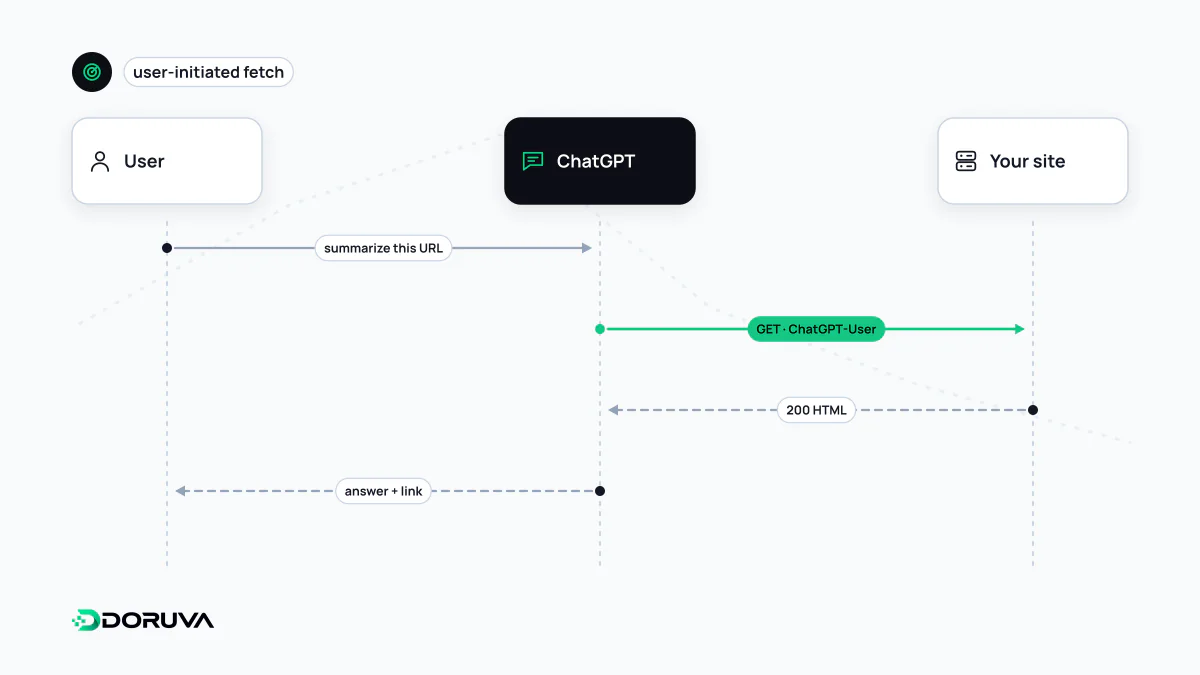
ChatGPT-User is the user agent OpenAI uses for certain user-initiated actions in ChatGPT and Custom GPTs; when someone asks a question, ChatGPT may visit a web page under this name. According to OpenAI, it is not used to crawl the web automatically, robots.txt rules may not apply because a user started the action, and it does not determine whether content can appear in ChatGPT search.
Also known as: ChatGPT User agent, ChatGPT-User bot, OpenAI ChatGPT-User, ChatGPT-User user agent
When it shows up
According to OpenAI's crawler documentation, ChatGPT-User handles certain user actions in ChatGPT and Custom GPTs. When someone asks ChatGPT or a Custom GPT a question, it may visit a web page with the ChatGPT-User agent. The same description mentions that ChatGPT users can also interact with external applications through GPT Actions.
What defines it is that a person, not a crawl queue, triggers the request. OpenAI states that ChatGPT-User is not used to crawl the web in an automatic fashion. In your logs you will therefore see scattered requests that follow user interest rather than a steady crawl pattern: a page shared on social media might draw several fetches in an hour and then none for weeks.
What "robots.txt rules may not apply" means
The wording deserves a careful read. OpenAI says that because these actions are initiated by a user, robots.txt rules may not apply. That is not the same as "never apply", but it offers no assurance that a Disallow under User-agent: ChatGPT-User will reliably stop access. OpenAI also says ChatGPT-User is not used to decide whether content may appear in search, and directs site owners to OAI-SearchBot rules in robots.txt for search opt-outs and automatic crawling. The training preference is expressed through GPTBot.
Providers do not agree on how user-triggered fetchers should treat robots.txt. Anthropic documents that Claude-User lets site owners control which sites these requests can reach. Perplexity states outright that Perplexity-User generally ignores robots.txt rules. ChatGPT-User sits between the two, described in language that makes no firm commitment either way.
Recognizing and verifying it
The full user-agent string OpenAI documents:
Mozilla/5.0 AppleWebKit/537.36 (KHTML, like Gecko); compatible; ChatGPT-User/1.0; +https://openai.com/botNote that the link in this string is openai.com/bot, not the openai.com/gptbot found in GPTBot's string. Because user agents are easy to fake, compare the request's IP address against OpenAI's published list at https://openai.com/chatgpt-user.json whenever the decision matters. When filtering logs, match on ChatGPT-User rather than the full string so a version bump does not break your filter.
Should you block it?
Blocking ChatGPT-User at the firewall means that when a user asks ChatGPT about your page directly, or pastes its link, ChatGPT cannot read it. The answer then rests on other sources or on what the model already knew, and current prices, stock levels or policies on your page may not make it into the reply. A site that does not want its content used for model training can block GPTBot and still allow ChatGPT-User, keeping the two choices separate. If server load is the concern, a sensible rate limit is usually a better-balanced answer than an outright block. The other layers that affect whether bots get through are covered under bot accessibility.