

What is Featured Snippet?
Definition
A featured snippet is a search result format in which Google shows an excerpt from a page it judges to answer the query well, placing the text before the page title in a prominent box on the results page. Pages are selected automatically by Google's systems; no markup can request it. Site owners can only restrict it with nosnippet, max-snippet or data-nosnippet.
Also known as: position zero, answer box, featured snippets, snippet box
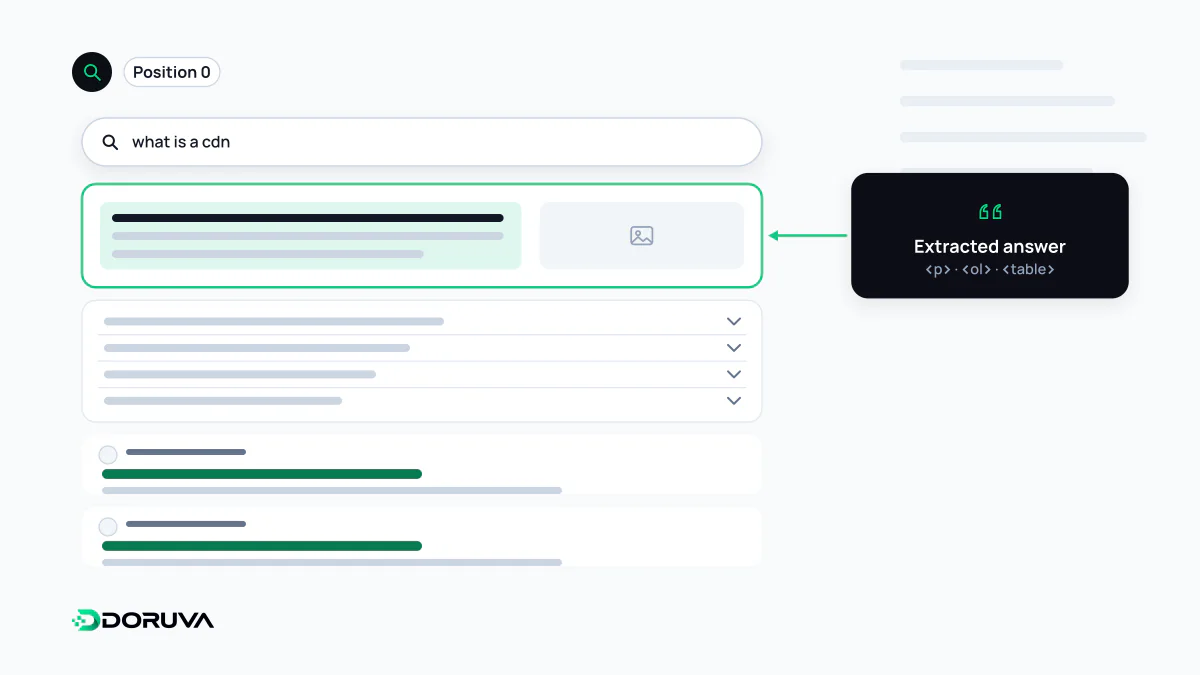
A result turned upside down
Google describes featured snippets as special boxes where the format of a regular result is reversed: the descriptive excerpt comes first, followed by the page title and link. Because the box usually sits at the top of the results, practitioners often call it "position zero".
Whether a page appears there is decided by Google's systems, which assess whether it would make a good featured snippet for that search and elevate it if so. There is no way to request one or trigger it with structured data. The belief that FAQ or some other schema type produces featured snippets is a persistent myth.
Content that lends itself to extraction
Selection is automatic, but certain patterns recur. Boxes are common for definitions ("what is X"), methods ("how to"), ordered steps and comparisons, and the content tends to appear as a short paragraph, a list or a table. A page structured like this makes each of those easy to lift:
<h2>What pressure should a combi boiler be at?</h2>
<p>Most domestic combi boilers should read between 1 and 1.5 bar
when the system is cold; the manufacturer's manual gives the exact figure.</p>

<h2>How do you repressurise a boiler?</h2>
<ol>
  <li>Switch the boiler off and let the system cool.</li>
  <li>Open the filling loop valves slowly.</li>
  <li>Close them once the gauge reaches the target pressure.</li>
</ol>
The principle: ask the question plainly in a heading, answer it straight away in a sentence that makes sense out of context, then expand. Steps belong in a real HTML list and comparisons in a real table. A clean heading structure and good answer extractability matter here, though they improve the odds rather than guarantee anything.
Limiting or opting out
Google documents three controls:
nosnippetblocks all snippets for the page, featured ones included; see nosnippet.max-snippetset to lower lengths: a featured snippet only appears if enough text can be shown to make it useful.data-nosnippetkeeps a marked section of HTML out of both featured and regular snippets.
<meta name="robots" content="max-snippet:50">
<p data-nosnippet>This section is never used in snippets.</p>
Google's current guidance is on its featured snippets page.
A mixed effect on traffic
Winning the box raises visibility but does not always raise clicks. When the answer fits in one sentence, many searchers read it on the results page and move on, which feeds the zero-click search trend. For queries that need steps, comparisons or depth, the box works as a credible shop window for the source. Featured snippets are also volatile: the source page for a query can change from one day to the next, so forecasting traffic around a single box is risky.
Connections to People Also Ask and AI answers
The same mechanism shows up elsewhere. According to Google's visual elements gallery, expanding a question in the People Also Ask box reveals a featured snippet. And to appear as a supporting link in AI Overviews or AI Mode, a page must be indexed and eligible to be shown with a snippet, with the same snippet controls applying. Writing clear answer paragraphs that stand on their own pays off on all three surfaces.