

What is sameAs Property?
Definition
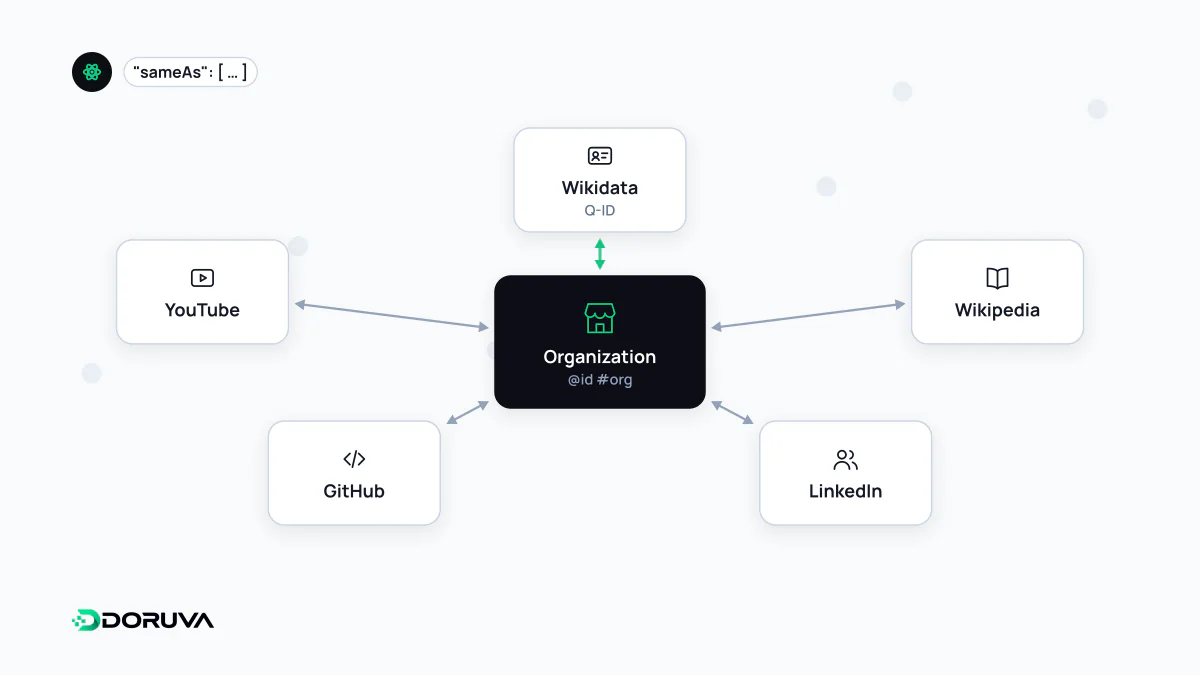
sameAs is a schema.org property that gives the URL of another web page which unambiguously indicates an item's identity, such as an organization's official social profiles, its Wikidata entry or its Wikipedia article. Used in structured data, it helps search engines and AI systems connect records on different websites to the same entity. Its value is a URL, and several links can be supplied as a list.
Also known as: sameAs, schema sameAs, sameAs links, schema.org sameAs
What the property says
Schema.org defines sameAs as the "URL of a reference Web page that unambiguously indicates the item's identity", giving the item's Wikipedia page, Wikidata entry and official website as examples. It is defined on Thing, the most general type, so it works on Organization, Person, Product, Place and everything else. The expected value is a URL; multiple profiles go in an array.
Google's Organization markup documentation describes sameAs as the URL of a page on another website with additional information about the organization, such as a profile on a social media or review site. In short, sameAs is the standard way to say "this record and the one on that page are the same thing", and it feeds directly into entity disambiguation.
Links that belong in sameAs
- Official profiles you control: the LinkedIn company page, Instagram, YouTube, X or GitHub accounts that really are yours and are active.
- Identity records: the Wikidata item and Wikipedia article, if they exist. Wikidata URLs contain the Q number, which makes them the most precise identity links available.
- Professional identifiers for people: an ORCID record for a researcher, a personal LinkedIn profile, author pages at publications they write for.
- Industry profiles: listings in trade bodies or professional registers where the organization has its own profile page.
Links that don't
- Your own site's URLs. The organization's website goes in
url; internal pages of the site are not sameAs. - Articles that mention you. A news story or blog post talks about the entity; it doesn't establish its identity.
- Pages about a different entity. The founder's personal profile does not belong in the company's Organization markup, and neither does a similarly named company's listing.
- Search result pages, shortened links and redirects. Use direct, permanent profile URLs.
- Abandoned accounts. Dead links add nothing, and an old handle taken over by someone else creates real confusion.
sameAs does not mean "related page". It is also weaker than OWL's owl:sameAs, which asserts that two identifiers denote exactly the same resource; schema.org's sameAs points to a reference page that indicates identity.
Example: a Person
sameAs is not just for organizations. On author pages, Person markup with sameAs ties outside evidence of expertise to the same individual:
{
  "@context": "https://schema.org",
  "@type": "Person",
  "@id": "https://www.example.com/team/jane-doe/#person",
  "name": "Jane Doe",
  "jobTitle": "Senior Software Architect",
  "worksFor": { "@id": "https://www.example.com/#org" },
  "sameAs": [
    "https://www.linkedin.com/in/example-jane-doe",
    "https://github.com/example-jane-doe"
  ]
}
The @id inside worksFor connects the person to the organization defined in the site's Organization markup. To mark up the author page as a whole, the ProfilePage type is available too.
Keeping the list honest
Profile URLs drift: handles change, platforms shut down, accounts get merged. Review the sameAs list at least once a year and check that every link still opens the right profile. Make the relationship two-way where you can: when the profiles link back to your website, the claim is confirmed from both ends.
sameAs does not guarantee a knowledge panel, a rich result or a place in AI answers. It makes it easier for systems to attach information from different sources to the right entity; whether that entity is shown depends on many other signals.