

What is Broken Link Building?
Definition
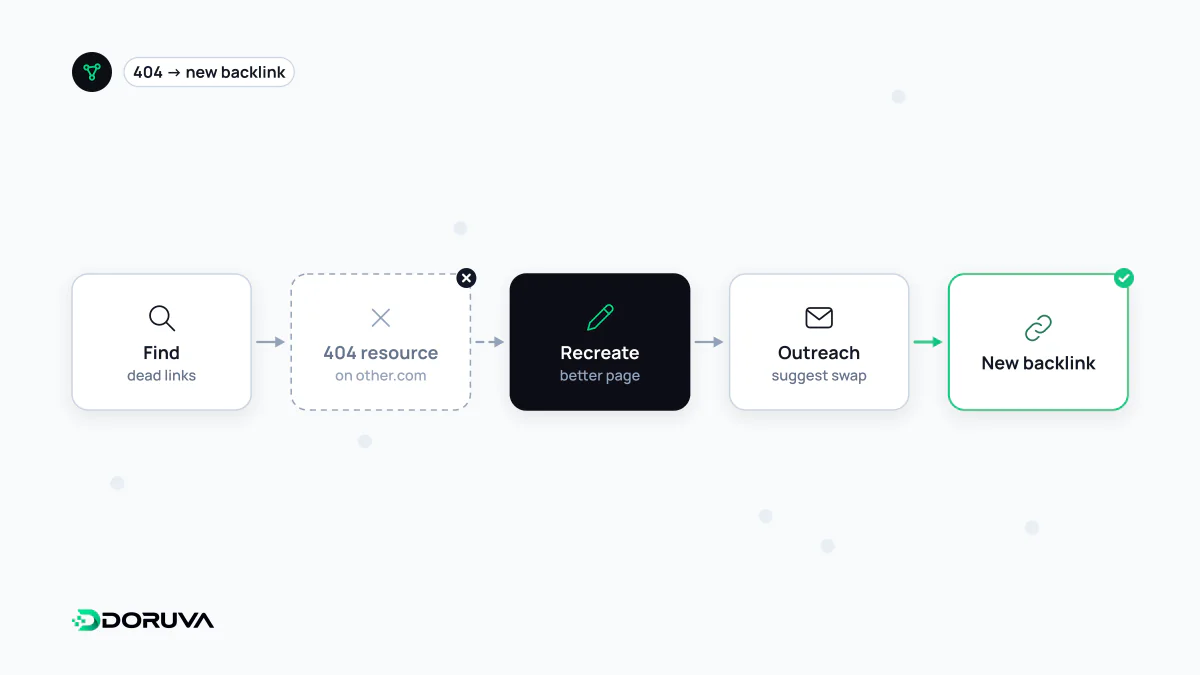
Broken link building is a link-earning technique in which you find links on other sites that point to resources that no longer work, tell the site owner about them and suggest your own equivalent content as a replacement. Its value comes from solving a real problem for the publisher; whether to change the link is entirely their decision, and no payment or link swap is offered in return.
Also known as: dead link building, broken link outreach, broken link method
Why the method works
Links decay. Organisations close, studies move to new URLs, domains lapse. The editor who curated a resource page usually has no idea some of those links now lead nowhere. Telling them is genuinely useful, and suggesting something that can replace the lost resource in the same message saves them work. That is where the method's persuasiveness comes from: it offers help before it asks for anything.
The process
- Find the dead resource. Crawl resource lists, guides and "useful links" sections in your field for links that return 404 or point to domains that no longer resolve. Link analysis tools can also show which pages of a defunct site still attract links.
- Confirm it is really gone. Make sure you are looking at a removed page, not a temporary 503.
- Learn what it used to say. Check a web archive to see what the page covered; you can't suggest a fitting replacement without knowing why the publisher linked to it.
- Have a genuine equivalent. If you don't already have current, thorough content that serves the same need, create it first. A sales page is not a substitute for a lost guide.
- Write a short note to the right person. Say exactly which page and which sentence contains the dead link.
- Respect the answer. A no, or silence, is an answer. Don't send chains of follow-ups.
What a good note looks like
Subject: Dead link on your "Mobile testing resources" page

Hi Sarah,
The "Responsive testing guide" link on your resources page now
leads to an error page; the site seems to have shut down.
We have a guide covering the same ground with current examples,
in case it's a useful replacement: https://example.com/guide/
The official browser documentation would be a good option too.
Best regards,
It is short, specific and written to one person. It reports the problem first and makes a single suggestion, and it even mentions another solid source besides your own. That builds trust and makes a reply more likely.
Ethical limits and spam risk
Google's spam policies list exchanging money, goods or services for links, and excessive link exchanges, as examples of link spam. So a broken link note should never offer payment, a gift or "we'll link to you too". Demanding specific anchor text or insisting the link must not be nofollow also oversteps into the publisher's editorial decision. Blasting hundreds of sites with an automated template looks like spam, and it raises separate questions about processing recipients' personal data and about rules on unsolicited commercial email.
Kept within those limits, it is one of the cleanest forms of off-page SEO: the link is an editorial choice the publisher makes for their own readers. The full rules are covered under Google spam policies.
Start with your own broken links
The same logic applies to your own site. Pages you deleted or moved in the past may still be attracting links from elsewhere. If those URLs now return 404, the backlinks pointing at them are wasted. A 301 redirect to the page that genuinely replaces the content is the quickest way to win that value back, without emailing anyone.