

What is Entity?
Definition
An entity is something that search engines and AI systems recognize as a single, distinguishable thing: a person, company, product, place or concept. Entities are identified by their identity and attributes rather than by the words used to name them. Consistent naming, structured data and sameAs links help systems merge different spellings into one entity and keep similarly named entities apart.
Also known as: named entity, semantic entity
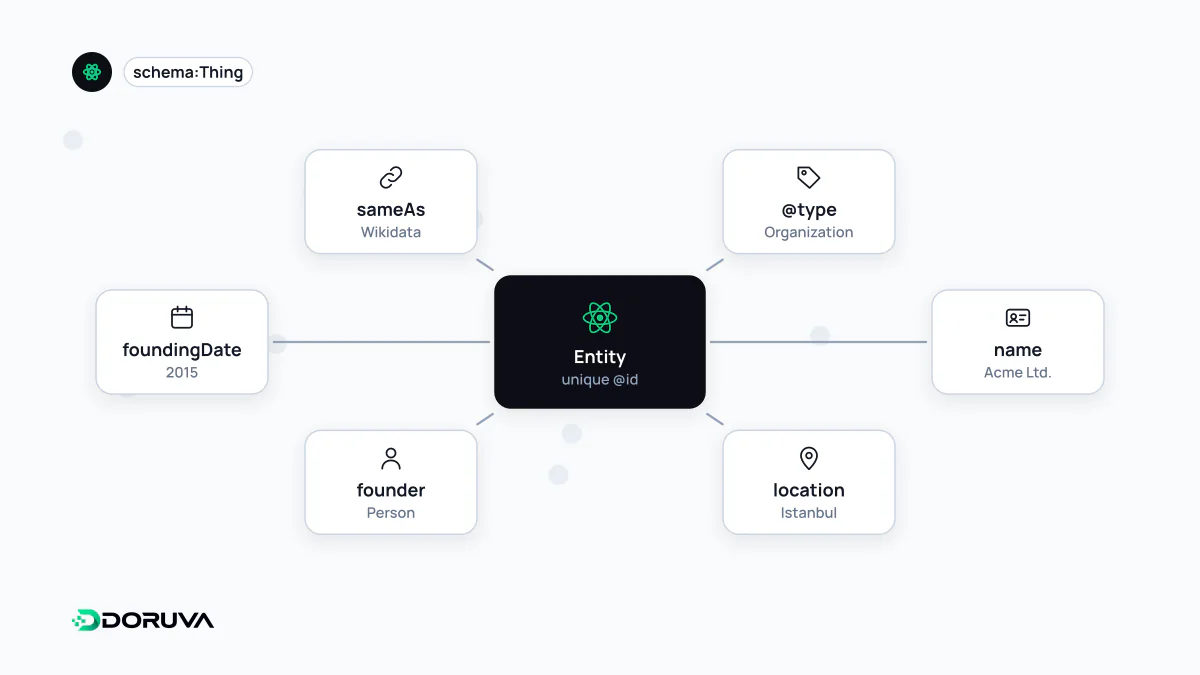
From strings to things
When Google introduced its Knowledge Graph in 2012, it summed up the shift as “things, not strings”. A system that sees a brand name only as a sequence of characters cannot tell a company apart from a village or a product with the same name. In an entity-based model each of them is a separate record with a type (Organization, Place, Product), attributes (address, founding date, logo) and relationships to other entities.
The structure that connects these records is a knowledge graph, and semantic search systems map the words in a query to such entities to work out what the user means.
Resolution and disambiguation
Any system dealing with entities has two jobs:
- Entity resolution: are “Acme Software”, “Acme Software Ltd.” and “acmesoftware” the same company? Variant spellings and references need to be merged into one entity.
- Disambiguation: which of two different companies called “Acme” is meant here? Similarly named entities must not be blended.
When either step goes wrong, an AI answer may describe your brand with another company's address, or not recognize it at all. That is why entity clarity is a cornerstone of AI visibility.
Making your own entity unambiguous
Systems recognize an entity from consistent signals across many sources, not from one page. The parts you control:
- One official name: use the same spelling on your site, social profiles, maps and directories. If you use an abbreviation, connect it explicitly to the full name.
- An identity page: state on your About page, in plain sentences, who you are, what you do and where you are based.
- Structured data: provide name, URL, logo and contact details in machine-readable form with Organization or LocalBusiness markup — see structured data.
- sameAs links: schema.org defines sameAs as the URL of a reference page that unambiguously indicates the item's identity, such as an official social profile or a Wikidata entry.
<script type="application/ld+json">
{
  "@context": "https://schema.org",
  "@type": "Organization",
  "@id": "https://www.example.com/#organization",
  "name": "Acme Software Ltd.",
  "alternateName": "Acme Software",
  "url": "https://www.example.com/",
  "logo": "https://www.example.com/logo.png",
  "sameAs": [
    "https://www.linkedin.com/company/acme-software",
    "https://www.instagram.com/acmesoftware"
  ]
}
</script>
The @id gives the entity a stable identifier you can reference from other pages, for example as the publisher in Article or Service markup, so every page points to the same organization.
Mistakes that blur an entity
- Different company names, addresses or phone numbers across the website, Google Business Profile and social accounts.
- sameAs links that are dead, unrelated or belong to a different organization.
- Structured data that states facts not visible on the page or not true.
- Assuming that markup alone guarantees a knowledge panel or a place in AI answers. It helps systems understand you; it is not a promise of display.