Web Design
What Does a Website Need to Be Visible on Google?
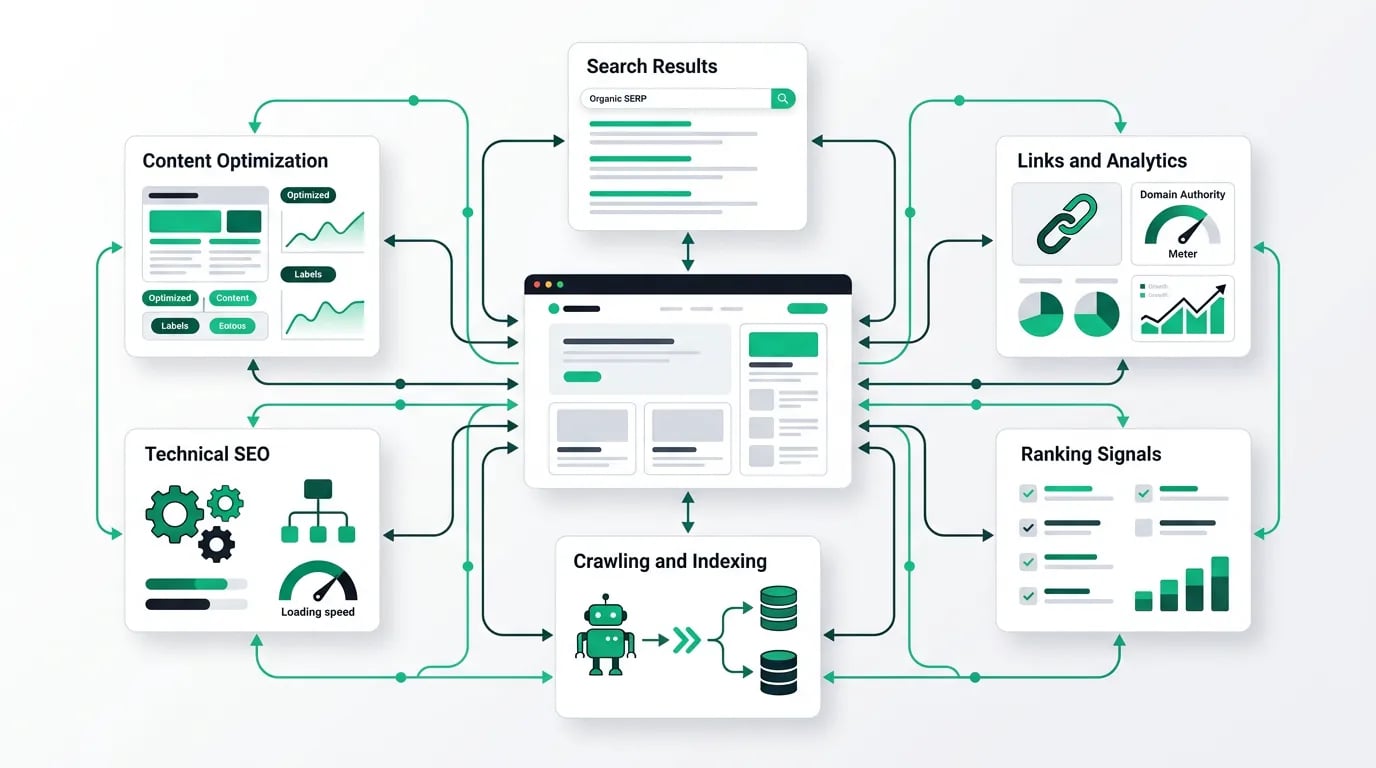
A website's visibility on Google depends on how well its design, technical infrastructure, content and SEO work together. In this guide, we cover the essential elements of search visibility, from how Google discovers websites to site speed, internal links, schema markup and AI visibility.
By Mehmet ÇalışırPublished Updated 12 min read

Contents
Simply having a website is not enough to become visible on Google. Search engines need to discover your pages, understand their purpose and determine when they are relevant to a user's search. That means several elements, from website design and technical infrastructure to content quality and internal linking, need to work together.
A visually impressive website can still struggle in organic search if it is slow, difficult to crawl or poorly structured. The same is true for a website that focuses heavily on SEO but provides a weak user experience. Today, a strong website should treat SEO, web design, technical performance, content quality and AI visibility as connected parts of the same digital system.
Short answer: A website that wants to become visible on Google should be crawlable and indexable, load quickly, work properly on mobile devices, satisfy search intent, use a clear website architecture and provide technical signals that help search engines understand its content.
At Doruva, we approach SEO, web design and AI visibility as complementary parts of a broader visibility strategy rather than completely separate disciplines.
How Does Google Discover a Website?
Before a website can rank on Google, Google first needs to discover and crawl its pages. Search engines use automated crawling systems to follow links across the web and identify new or updated URLs. Sitemaps, existing links and references from other websites can also help search engines discover pages.
However, being discovered does not automatically mean that a page will appear in search results. Google first needs to access the page, evaluate its content and determine whether it should be included in its index. That is why checking a site's crawlability and indexability is one of the first steps in technical SEO.

Why do sitemap.xml and robots.txt matter?
A sitemap.xml file provides search engines with an organized list of important URLs on a website. It can be particularly useful for new websites, large websites or sites with complex page structures because it gives search engines another way to identify important content.
The robots.txt file provides crawling instructions for automated bots. Incorrect rules in this file can unintentionally prevent search engines from accessing important areas of a website.
Other technical directives can create similar problems. An accidental noindex directive, incorrect canonical implementation or inaccessible URL can prevent a page from appearing in search results even if the content itself is valuable.
Google Search Console can be used to review indexing status, submit sitemaps and identify some crawling or indexing issues.
Internal links also play an important role in discovery. When the homepage links to important service pages, service pages link to relevant resources and blog posts link back to commercial pages, both users and search engines can better understand how the website is organized.
How Technical Infrastructure Affects SEO
A significant part of SEO takes place behind the interface that visitors see. Website code, URL structure, server performance, security and page rendering can all influence how easily search engines can access and interpret a website.
A technically well-structured website should make the purpose of each important page as clear as possible. Page titles, canonical URLs, HTTP status codes and heading structures should be implemented consistently so that search engines can better understand which URLs represent the primary version of a page.

What should be checked during technical SEO?
Important technical areas include:
- Making sure important pages can be crawled
- Ensuring indexable pages are not accidentally marked
noindex - Using the correct canonical URL on important pages
- Reducing broken links and unnecessary 404 errors
- Implementing redirects correctly
- Serving the website securely over HTTPS
- Controlling unnecessary or duplicate URL variations
- Maintaining a logical H1, H2 and H3 hierarchy
- Ensuring important content is accessible to search engines
JavaScript should also be considered on modern websites. Interactive effects and animations can improve the user experience, but problems may arise when essential content is only available after complex client-side processes have completed.
This is one reason why SEO and web design should not be treated as completely separate areas. Strong visual design should be supported by a technically reliable foundation.
Content Quality and the Importance of Search Intent
One of the most important parts of organic visibility is providing content that actually answers what the user is looking for. The goal is not to repeat a target keyword as many times as possible. The goal is to understand the searcher's intent and provide a useful, relevant answer.
For example, someone searching for "why is my website not showing on Google?" probably does not want to read only a general definition of SEO. They are likely experiencing a specific problem and want to understand what could be wrong. A useful article should therefore explain possible indexing issues, technical problems, content gaps and practical areas to investigate.

How should content be created for search intent?
Search queries can have very different purposes. A user may be looking for information, comparing alternatives or actively searching for a service provider. Those different intentions should not always be answered with the same page structure.
Strong content should:
- Provide the main answer without hiding it unnecessarily
- Explain the topic clearly
- Use headings that create an understandable information flow
- Support important claims with appropriate explanations
- Avoid unnecessary repetition and keyword stuffing
- Link naturally to relevant supporting pages
Content length alone does not determine quality. A topic that can be answered clearly in a short explanation should not be artificially extended. At the same time, a complex topic should not be reduced to a few superficial paragraphs simply to keep the page short.
It is also useful to build related content around a website's main areas of expertise. For example, an SEO service page can be supported by guides about technical SEO, content optimization, indexing, site performance and search visibility. This can help users explore a topic while also creating a clearer relationship between pages.
Mobile Usability and Website Speed
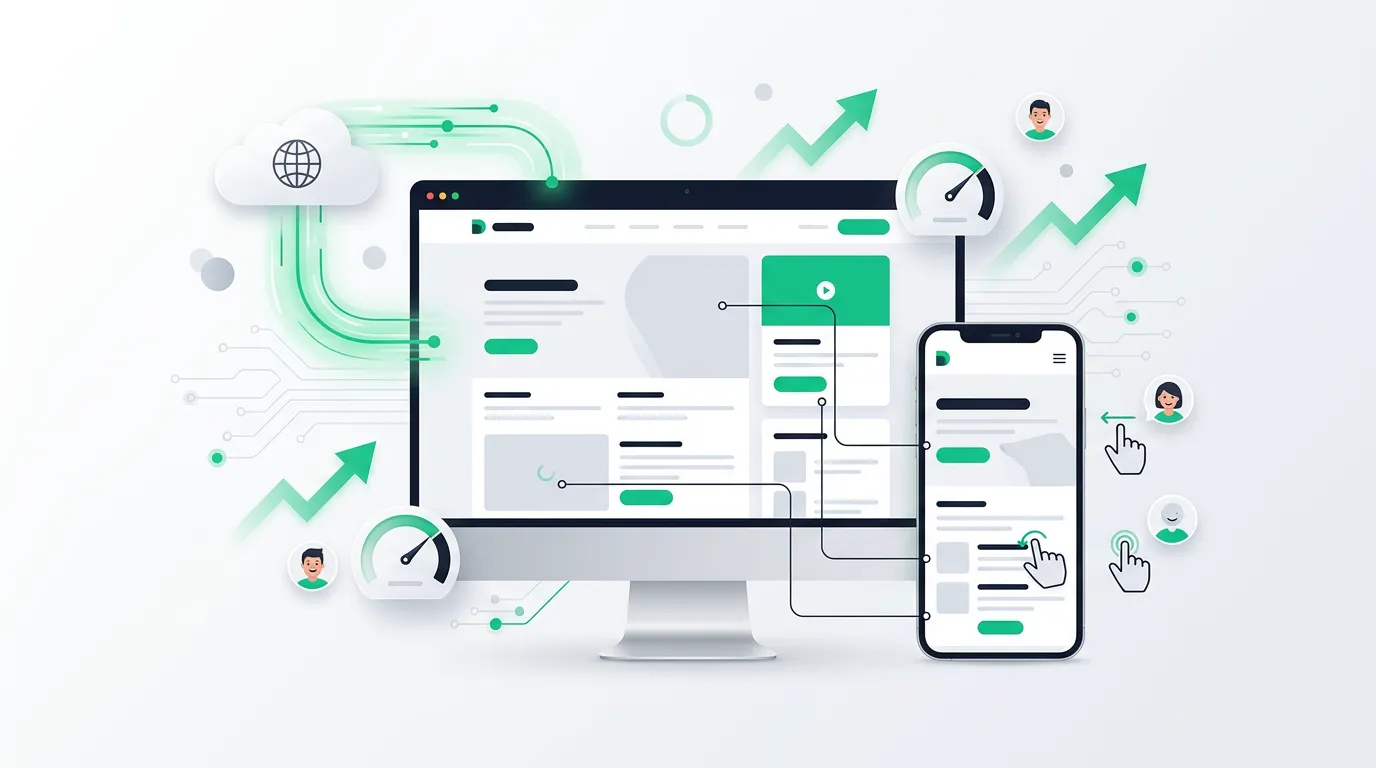
A website that looks good only on desktop devices is no longer enough. Visitors access websites through different screen sizes, devices and network conditions, so pages should be responsive, readable and efficient across different environments.
Mobile compatibility means more than simply shrinking the desktop layout. Navigation should remain usable, buttons should be easy to interact with, text should remain readable and forms should function properly. Important content should not disappear or become difficult to access on smaller screens.
Why should Core Web Vitals be monitored?
Core Web Vitals are technical metrics used to evaluate important aspects of page experience. Three widely monitored metrics are:
- LCP (Largest Contentful Paint): Measures how quickly the main visible content is displayed.
- INP (Interaction to Next Paint): Evaluates how quickly the page responds to user interactions.
- CLS (Cumulative Layout Shift): Measures unexpected layout movement while a page is loading.
These metrics do not determine SEO success on their own, but they provide useful information about technical performance and user experience.
Large images, unnecessary JavaScript, heavy animations, inefficient font loading and slow server response times can all reduce website performance.
A strong web design approach should therefore focus not only on visual impact but also on making the experience efficient and usable.
Website Architecture and Internal Linking
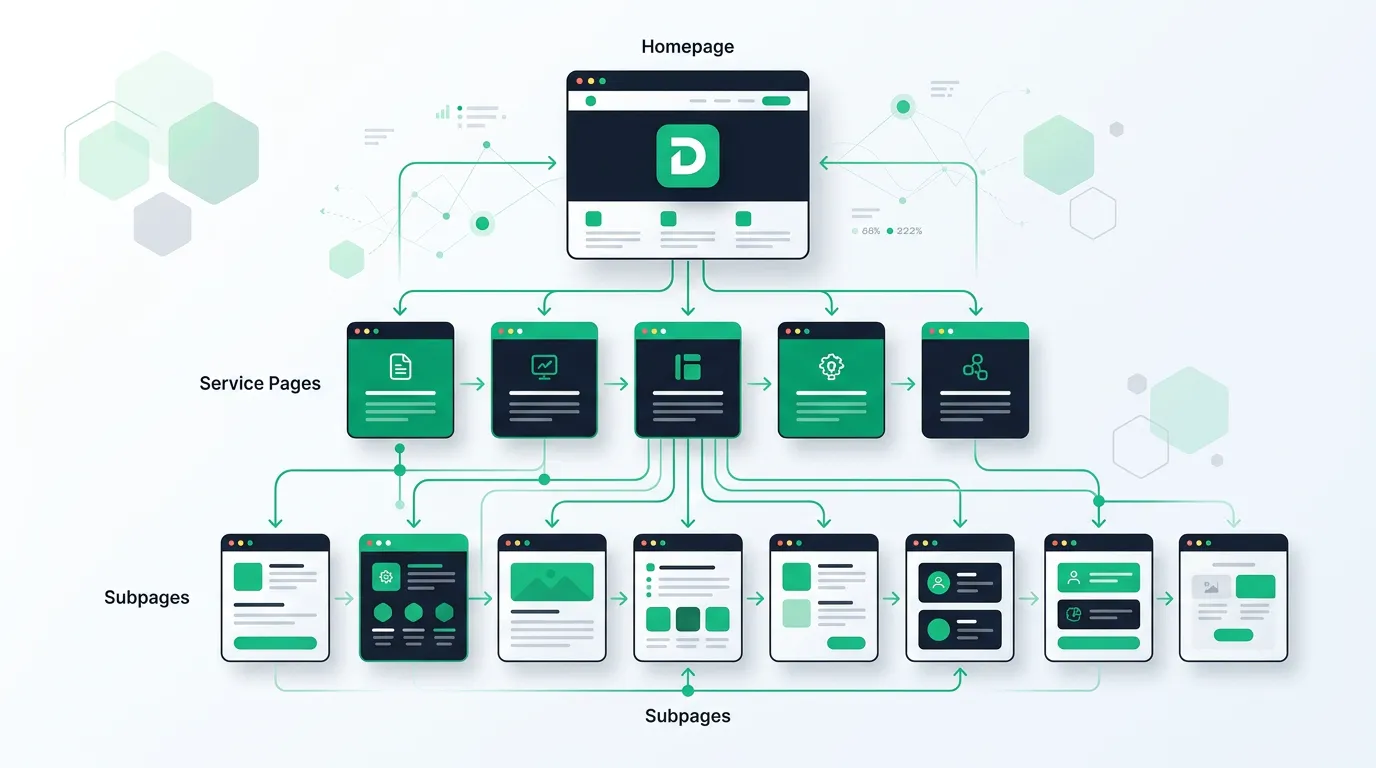
Website architecture defines how pages are organized and connected. Users should be able to reach important information through a logical path, and search engines should be able to understand which pages are important and how different topics relate to one another.
For example, a service-based website may connect its homepage to core service pages, those service pages to relevant sub-services and supporting guides, and blog content back to relevant commercial pages. This creates a more understandable hierarchy than publishing every page in isolation.
Why are internal links important for SEO?
Internal links are links between pages on the same domain. They serve several useful purposes:
- They help users discover relevant content.
- They help search engines discover new and existing pages.
- They provide additional context about the relationship between pages.
For example, someone reading this guide may naturally want to learn more about SEO services, review our web design services or understand how AI visibility relates to modern search experiences.
Internal links should not be added to every sentence simply for SEO. Links are most useful when they guide users toward genuinely relevant information with descriptive anchor text.
Important pages should also avoid becoming isolated. A page that receives no meaningful internal links may be more difficult for both users and crawlers to discover. These pages are often referred to as orphan pages.
Structured Data and Schema Markup
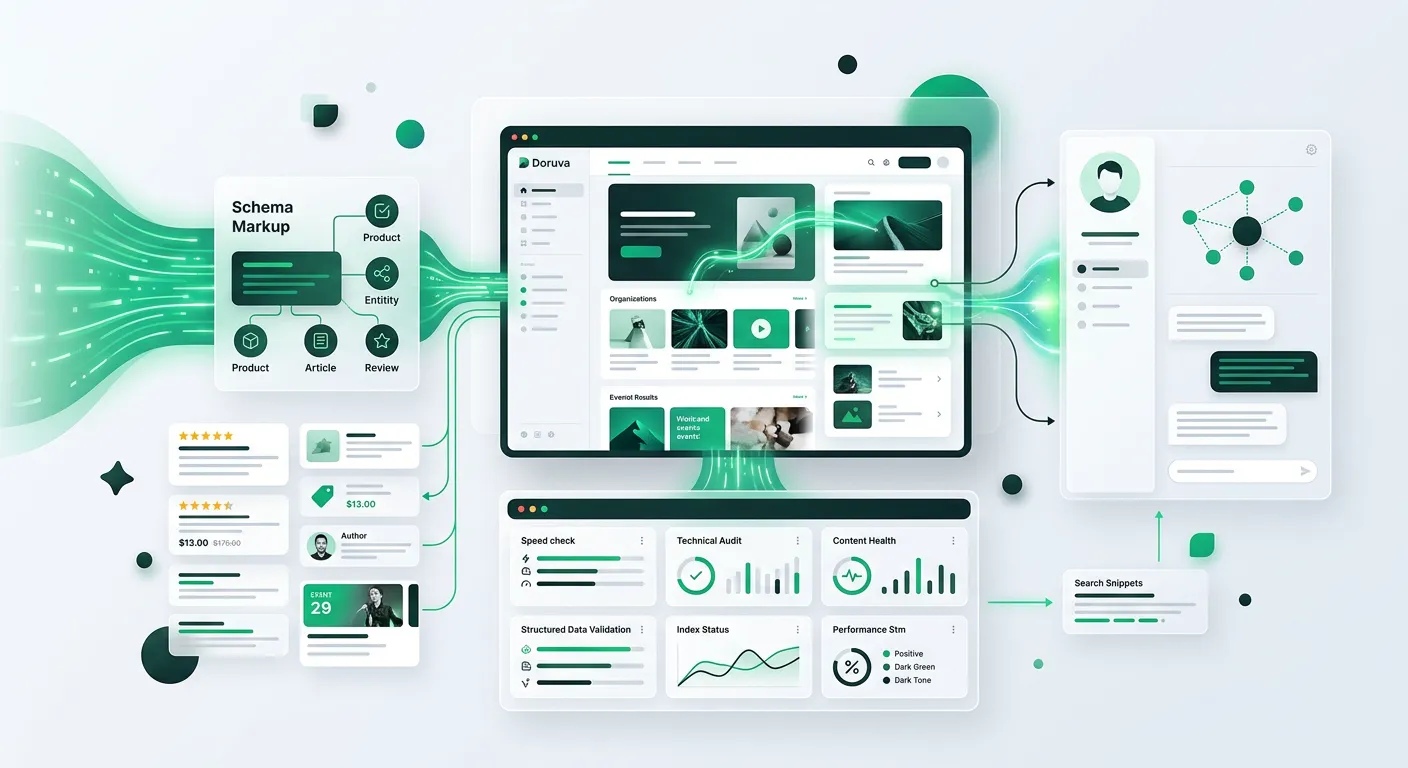
HTML content and page structure already provide search engines with a significant amount of information. Structured data can provide additional machine-readable context about specific types of content and entities.
Schema.org vocabulary can be used to describe a page as an article, organization, service, breadcrumb structure or another appropriate content type. The purpose is not to provide search engines with hidden or misleading information, but to describe information that is already present on the page in a more structured format.
Depending on the website and page type, relevant structured data may include:
OrganizationWebSiteWebPageServiceArticleorBlogPostingBreadcrumbList- Other appropriate Schema.org types where relevant
For example, this page is a blog article, so it can be represented using Article or BlogPosting structured data. Information such as the headline, author, publication date, modification date and featured image can also be included when appropriate.
Using schema markup does not guarantee higher rankings or enhanced search results. Its role is to make the structure and meaning of information easier for machines to interpret.
Structured data should always match the visible content on the page and should be implemented correctly. Misleading or inaccurate markup should be avoided.
Why Is Visibility in AI Search Becoming Important?
The way people search for information is changing. In addition to traditional search engines, users increasingly interact with systems such as ChatGPT, Gemini, Claude and other AI-based assistants when researching topics, comparing options or asking direct questions.
As a result, digital visibility is no longer limited to traditional search result pages. It is becoming increasingly important for a brand and its content to be clearly understandable, well structured and supported by trustworthy information.
There is no single "AI visibility tag" or guaranteed optimization technique. Strong technical foundations, accessible content, clear brand information, consistent topical coverage and solid SEO fundamentals remain important.
How can a website become easier for AI systems to understand?
The identity of the brand should be clear. A website should explain what the company does, which services it provides, where its expertise lies and how it helps customers without presenting contradictory information across different pages.
Content should answer questions clearly, define important concepts and use structured formats such as lists or tables when they genuinely improve clarity. Author and organization information can also help create additional context.
Important information should not exist only inside images or appear exclusively after complex user interactions. Making core content accessible within the page's HTML generally creates a clearer experience for both users and automated systems.
Doruva's AI visibility approach does not treat AI optimization as a replacement for SEO. Instead, the goal is to build on strong SEO fundamentals with content and technical structures that are easier for modern search and answer systems to interpret.
No optimization can guarantee that a specific AI system will cite, recommend or mention a particular website. The objective is to improve accessibility, clarity, consistency and authority signals as much as reasonably possible.
How Can You Test a Website's SEO Performance?
You cannot determine whether a website is healthy from an SEO perspective simply by looking at its design. A proper evaluation should consider technical configuration, indexing, content, performance and internal linking together.
Google Search Console is one of the most useful starting points. It can provide information about how Google sees pages, which URLs are indexed and whether certain crawling or indexing problems exist.
Performance testing tools, website crawlers and on-site analysis systems can also help identify different types of problems.
What should an SEO test check?
A basic SEO review should evaluate areas such as:
- Can Google access the website?
- Are important pages indexed?
- Are
robots.txtandsitemap.xmlconfigured correctly? - Are title tags and meta descriptions properly implemented?
- Is the H1, H2 and H3 hierarchy logical?
- Do canonical tags point to the correct URLs?
- Are there broken links or unnecessary redirect chains?
- Does the site work properly on mobile devices?
- How does the site perform in Core Web Vitals?
- Are images unnecessarily large?
- Does internal linking support important pages?
- Is structured data implemented correctly?
- Does the content genuinely satisfy search intent?
The Doruva SEO Test Tool can be used to review fundamental SEO signals and create an initial overview of a website's current condition.
Automated tools are useful because they can surface potential issues quickly. However, their output should still be interpreted in context. A single technical metric or performance score should not be treated as a complete assessment of a website's overall SEO performance.
A Google-Visible Website Should Be Designed as One System
SEO should not be treated as a collection of meta tags added after a website has already been completed. Technical infrastructure, design, content, mobile usability, performance, website architecture and structured data should be considered parts of the same system from the beginning.
On a well-designed website, visitors can reach relevant information easily while search engines can better understand what individual pages are about, how they relate to one another and which areas of the site are most important.
AI-based search and answer systems now add another dimension to this process. Building clear, accessible and well-structured content on top of strong SEO foundations creates a more sustainable approach for both traditional search visibility and emerging AI-powered discovery experiences.
At Doruva, we treat SEO, web design and AI visibility as connected components of a brand's overall digital visibility rather than isolated services.
You can start by checking your website with the Doruva SEO Test Tool. For a more comprehensive assessment or project planning, you can also contact Doruva.
Frequently Asked Questions
Is having a website enough to appear on Google?
No. A website should be accessible and crawlable by Google, its important pages should be indexable, its technical infrastructure should work properly and its content should satisfy relevant search intent.
What is the relationship between SEO and web design?
Web design affects several areas related to SEO, including user experience, mobile usability, page structure and performance. For this reason, SEO and web design should not be treated as completely separate disciplines.
Does website speed affect Google rankings?
Website performance and Core Web Vitals are important parts of page experience, but rankings are not determined by a single speed score. Content quality, technical SEO, search intent and many other signals are evaluated together.
Does schema markup help a website rank higher on Google?
Website performance and Core Web Vitals are important parts of page experience, but rankings are not determined by a single speed score. Content quality, technical SEO, search intent and many other signals are evaluated together.
How can a website improve its visibility in AI search?
A website should be technically accessible, clearly explain its brand and services, publish useful and trustworthy content, maintain a logical site architecture and build on strong SEO foundations. However, no optimization can guarantee visibility in a specific AI system.